
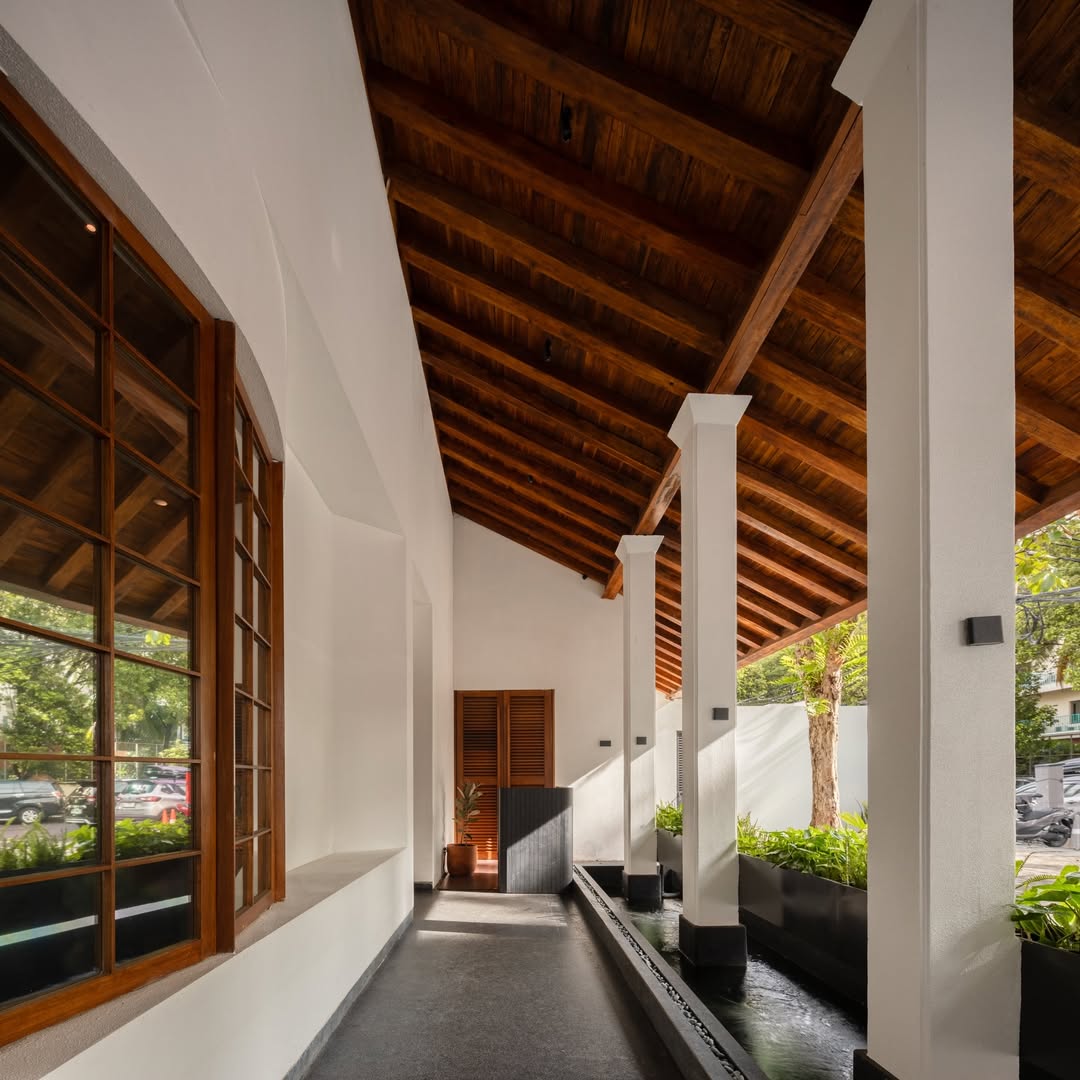
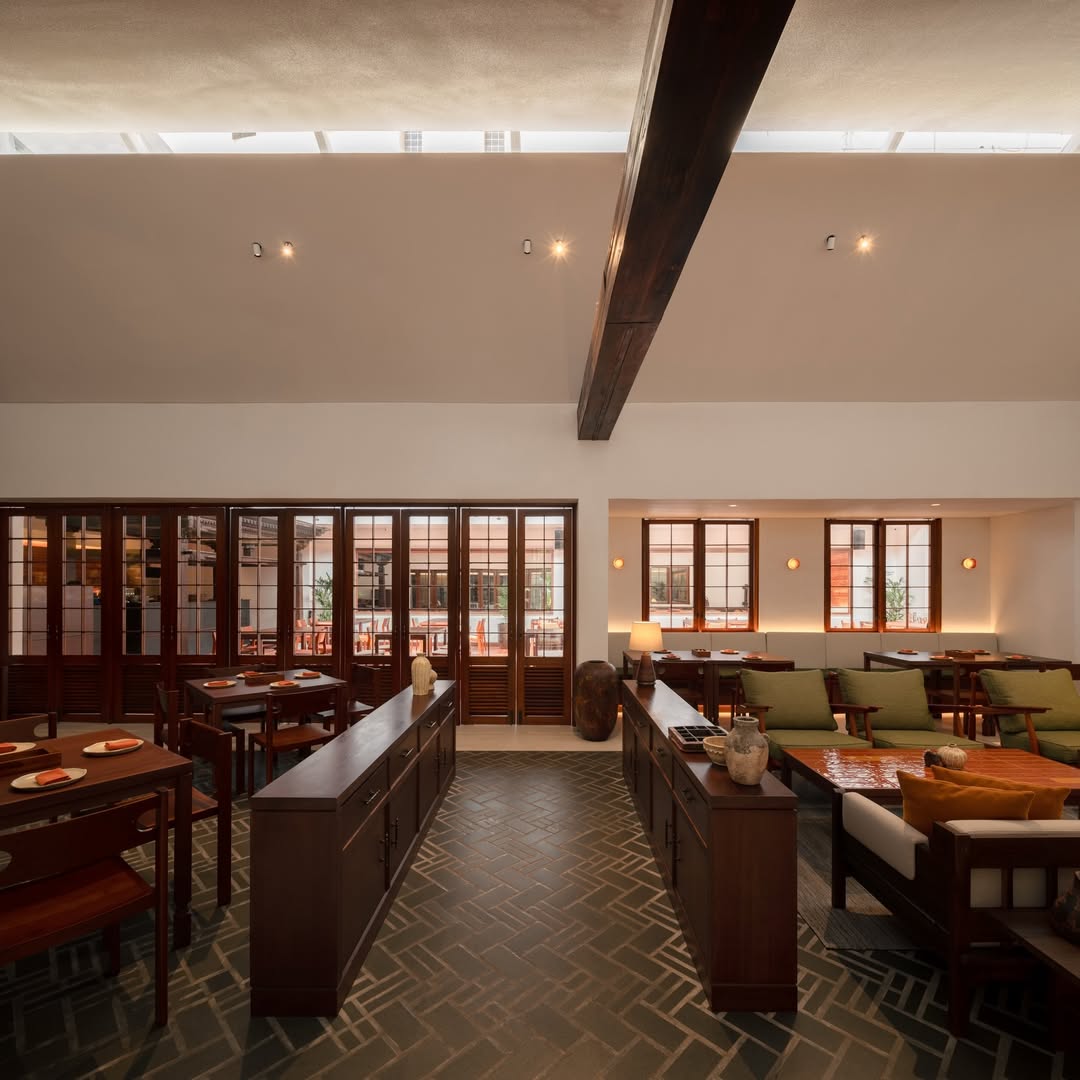
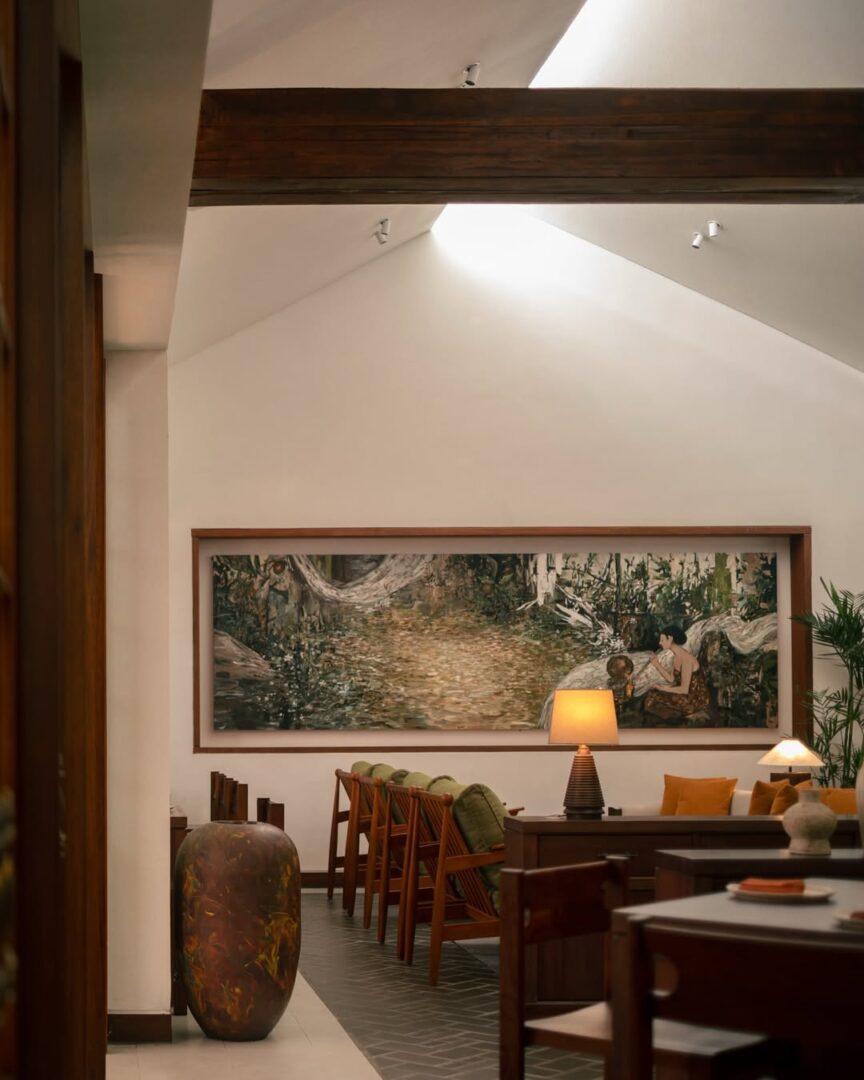
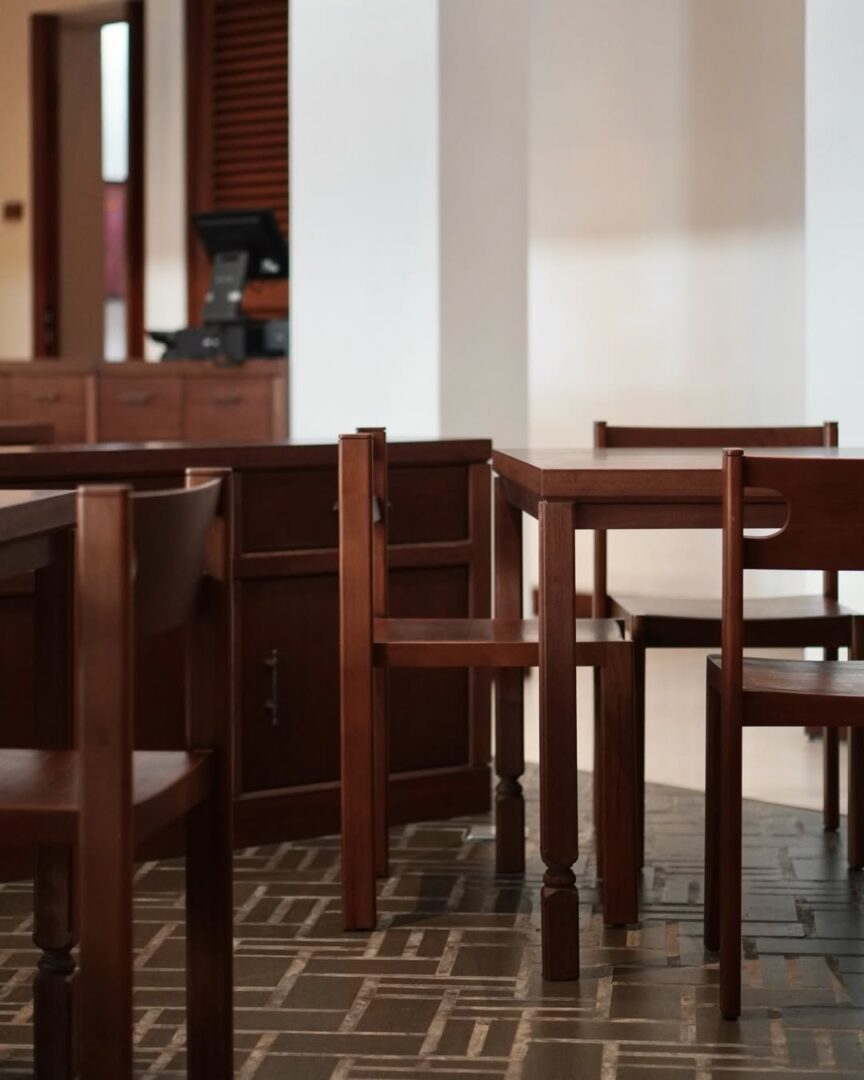
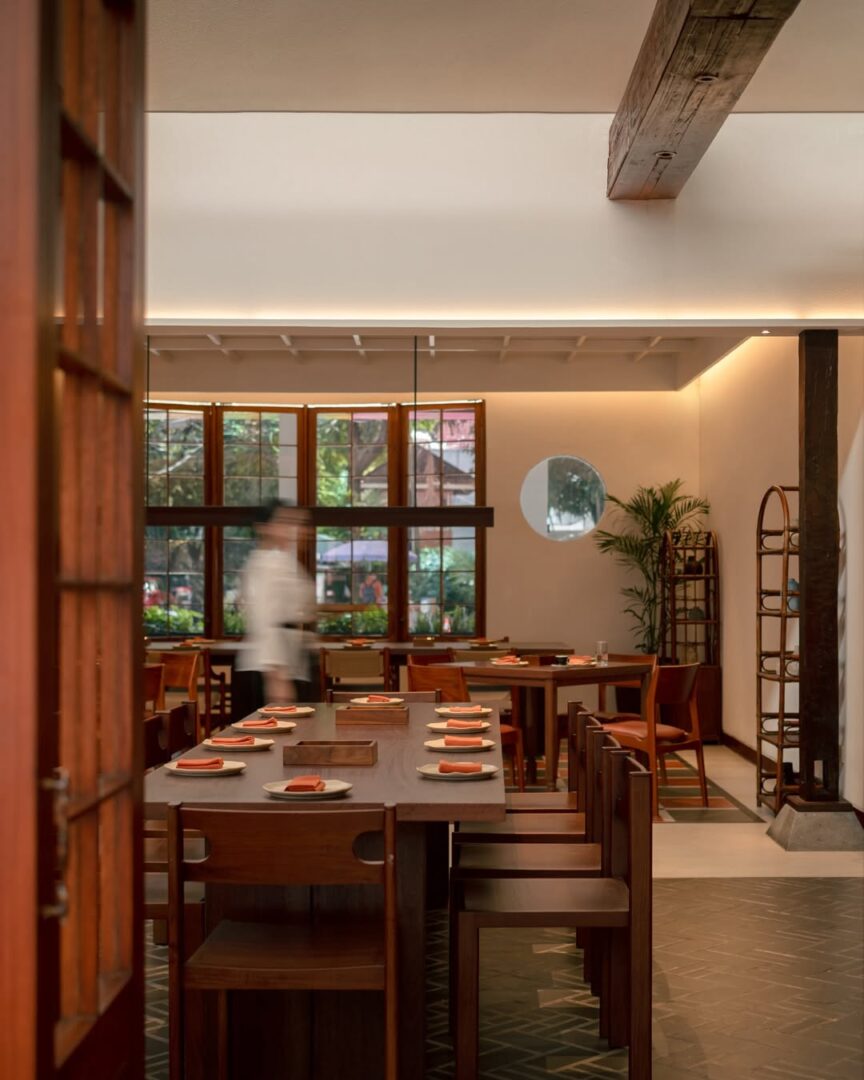
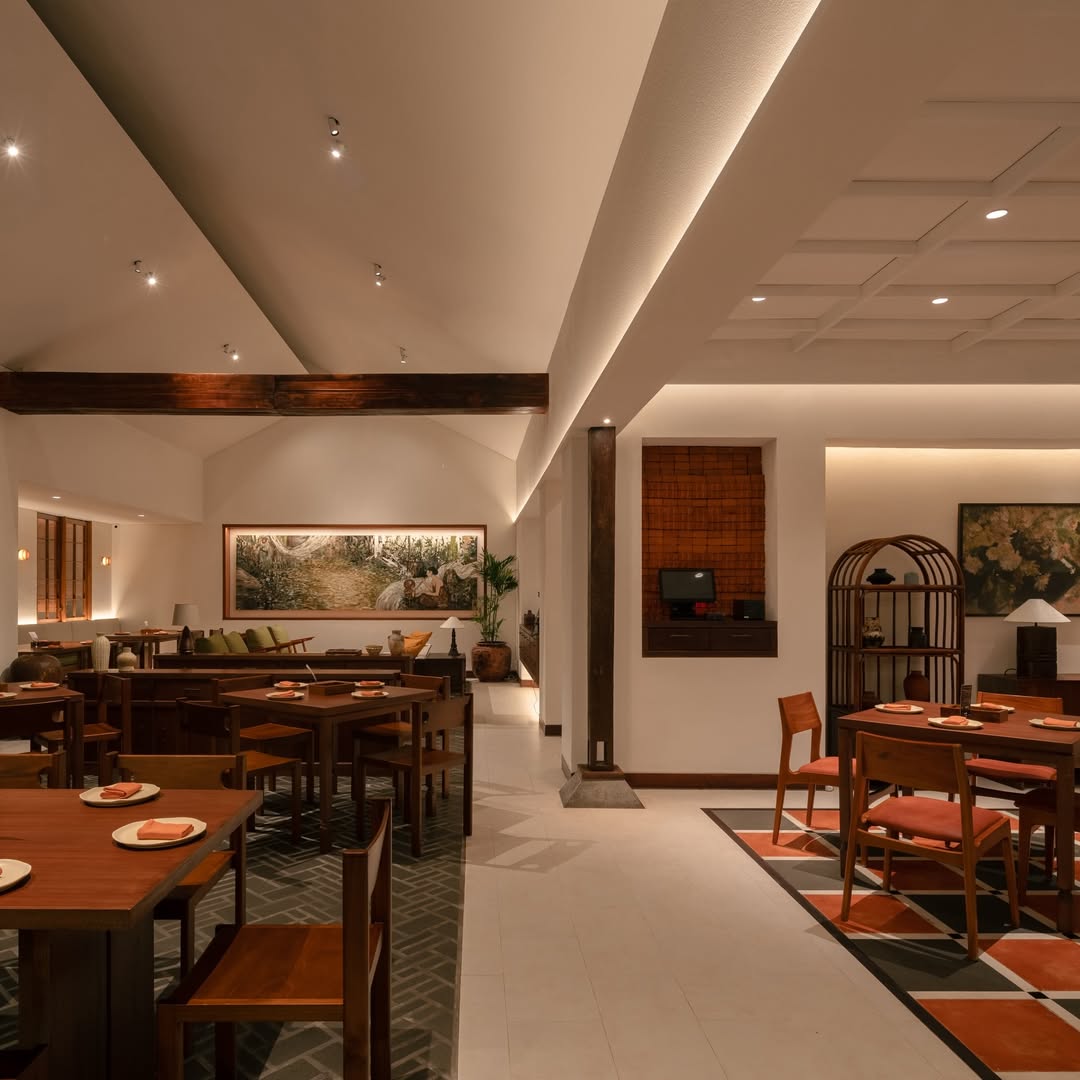
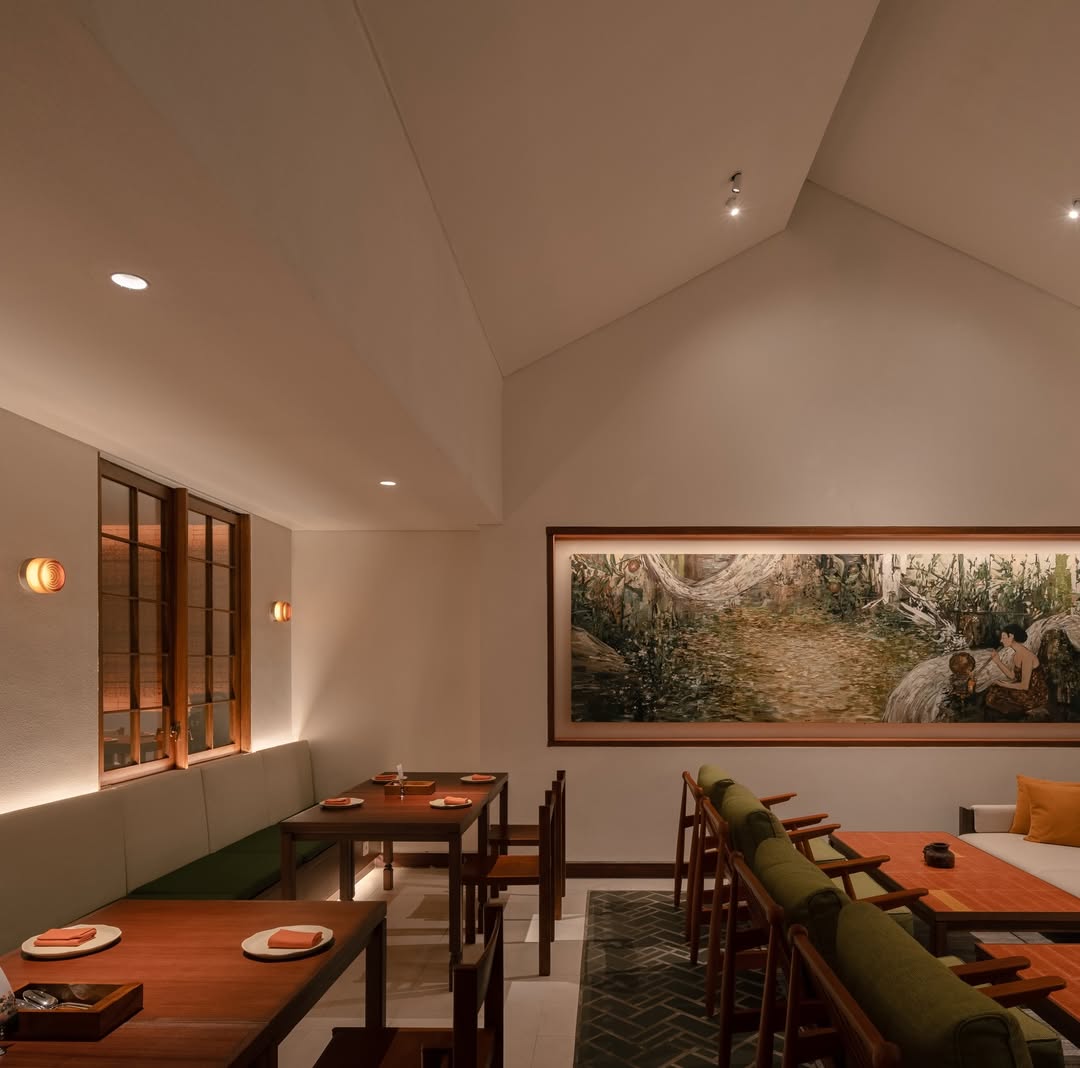
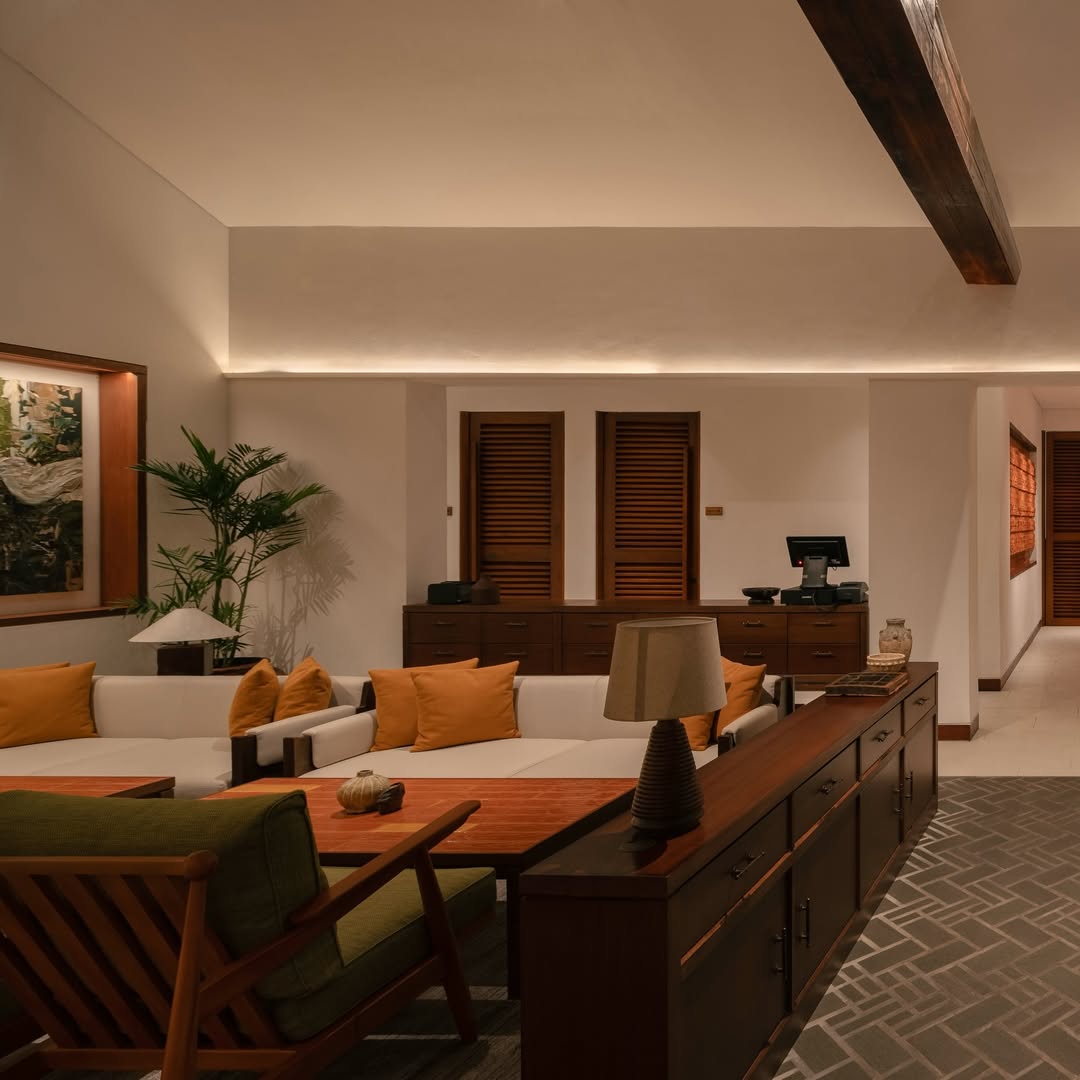
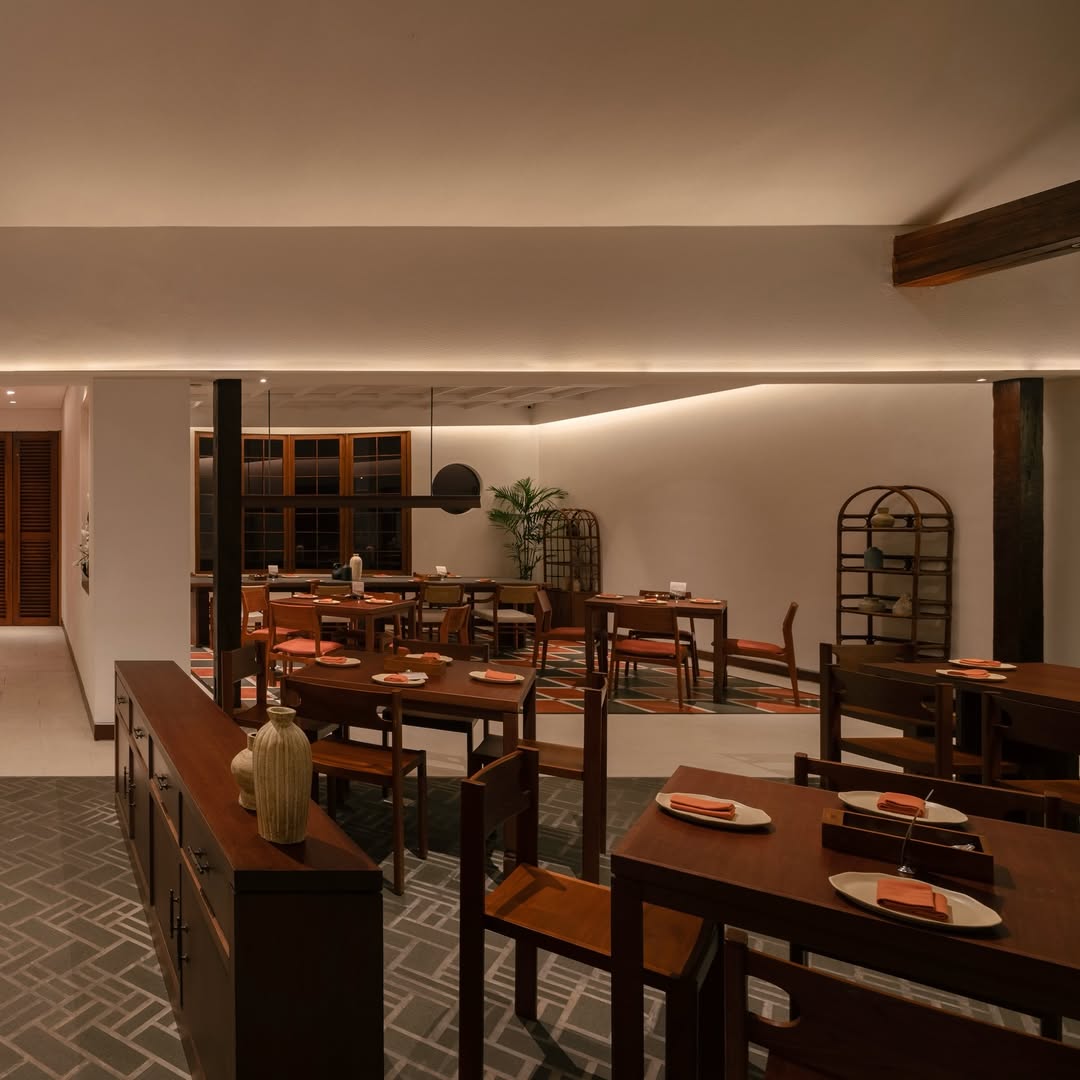
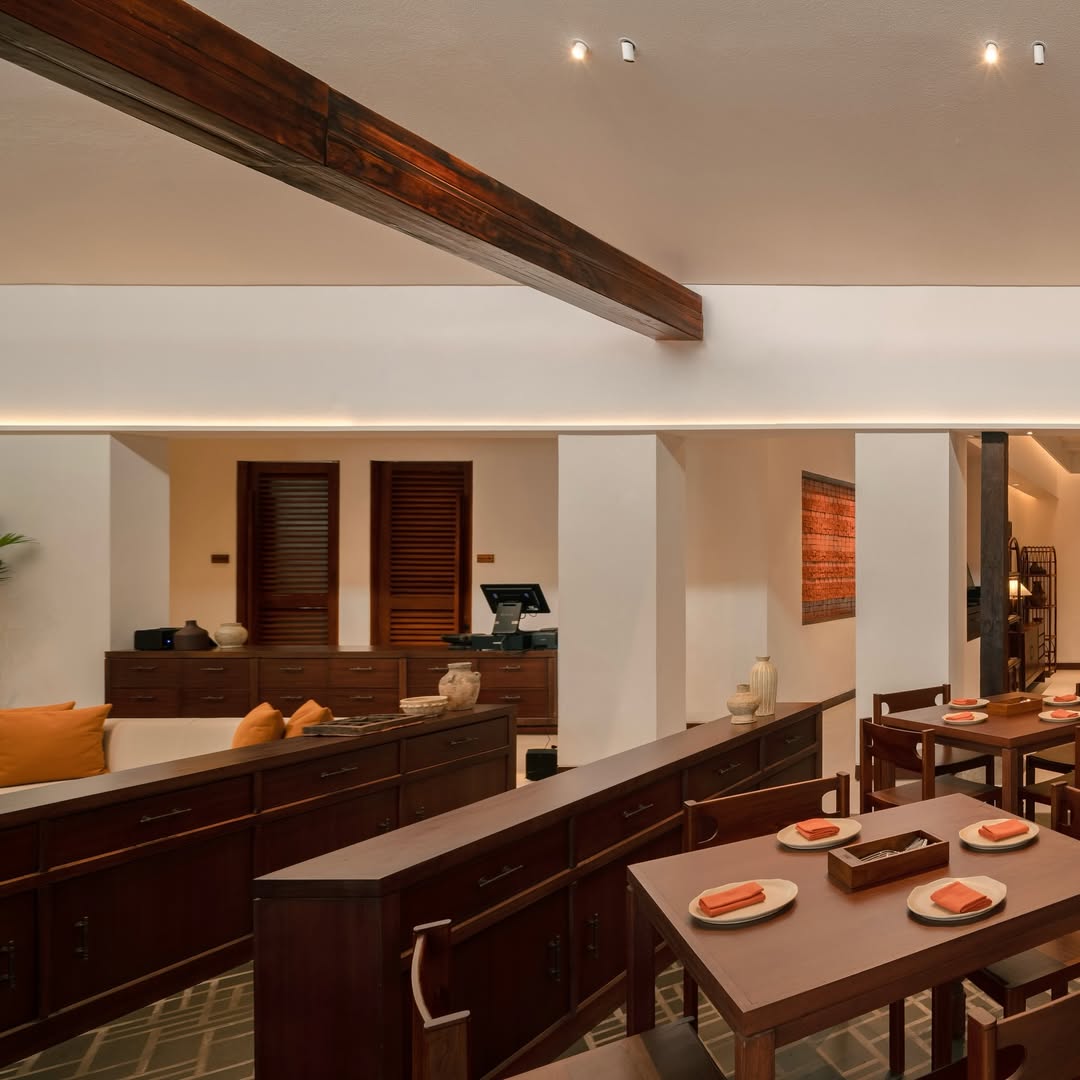
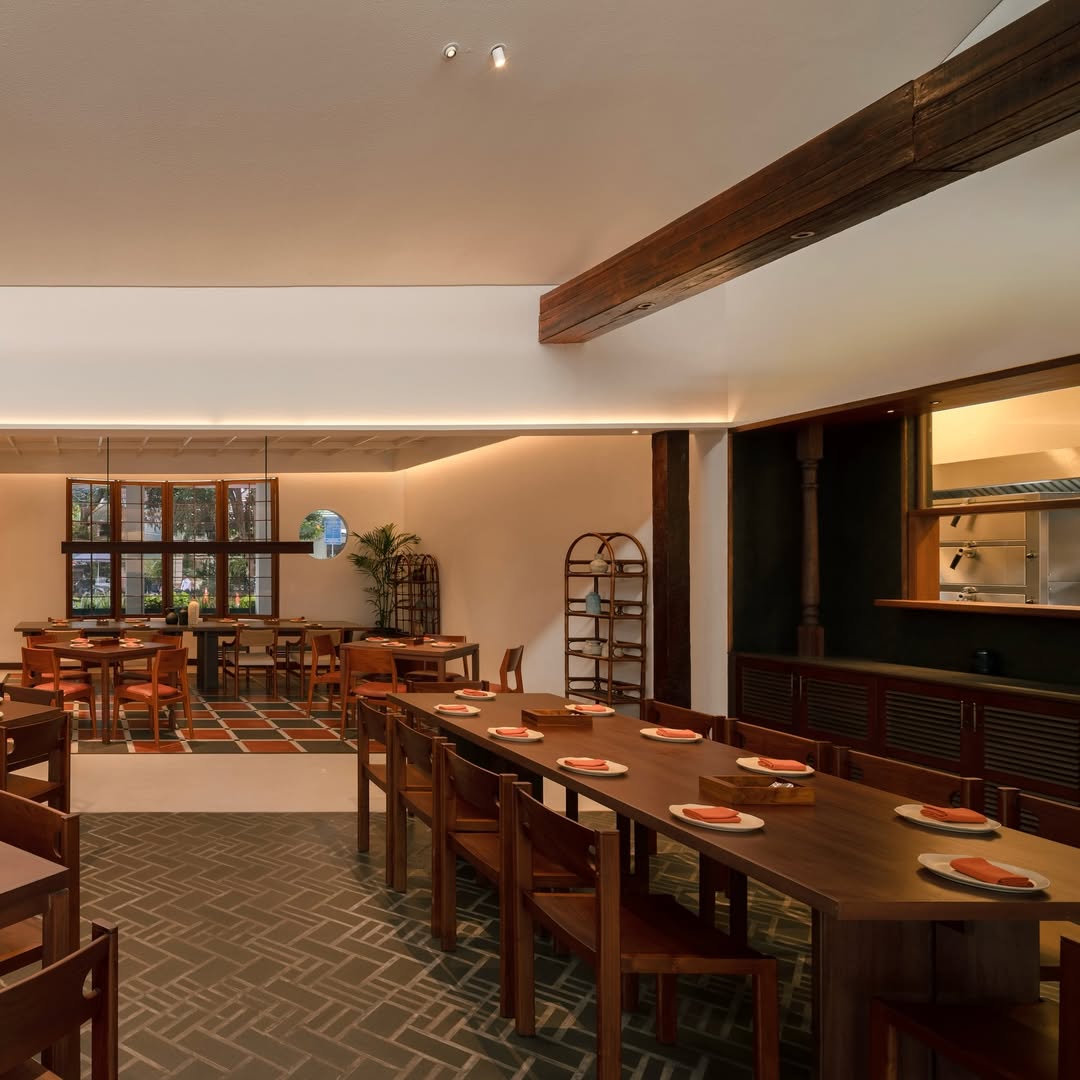
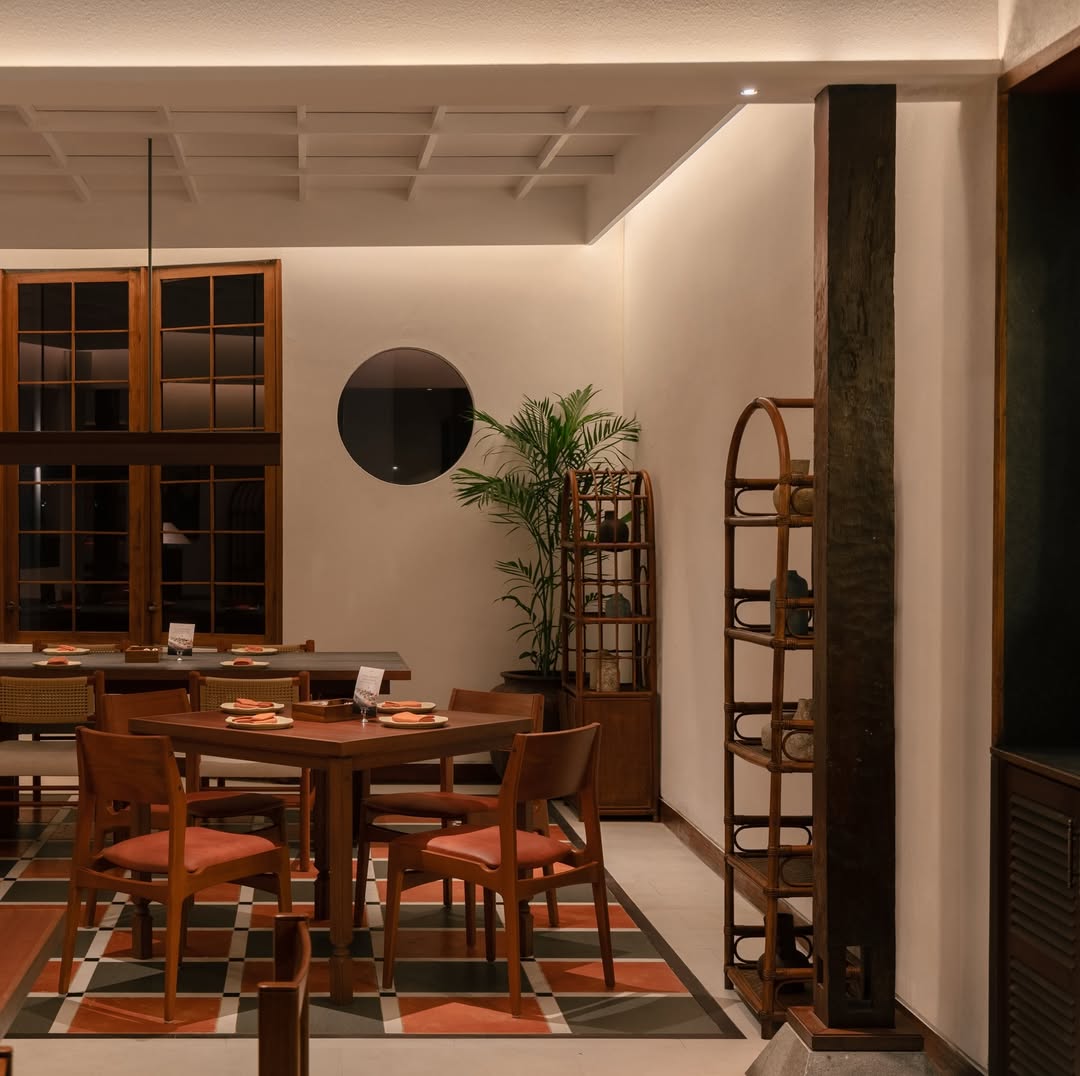
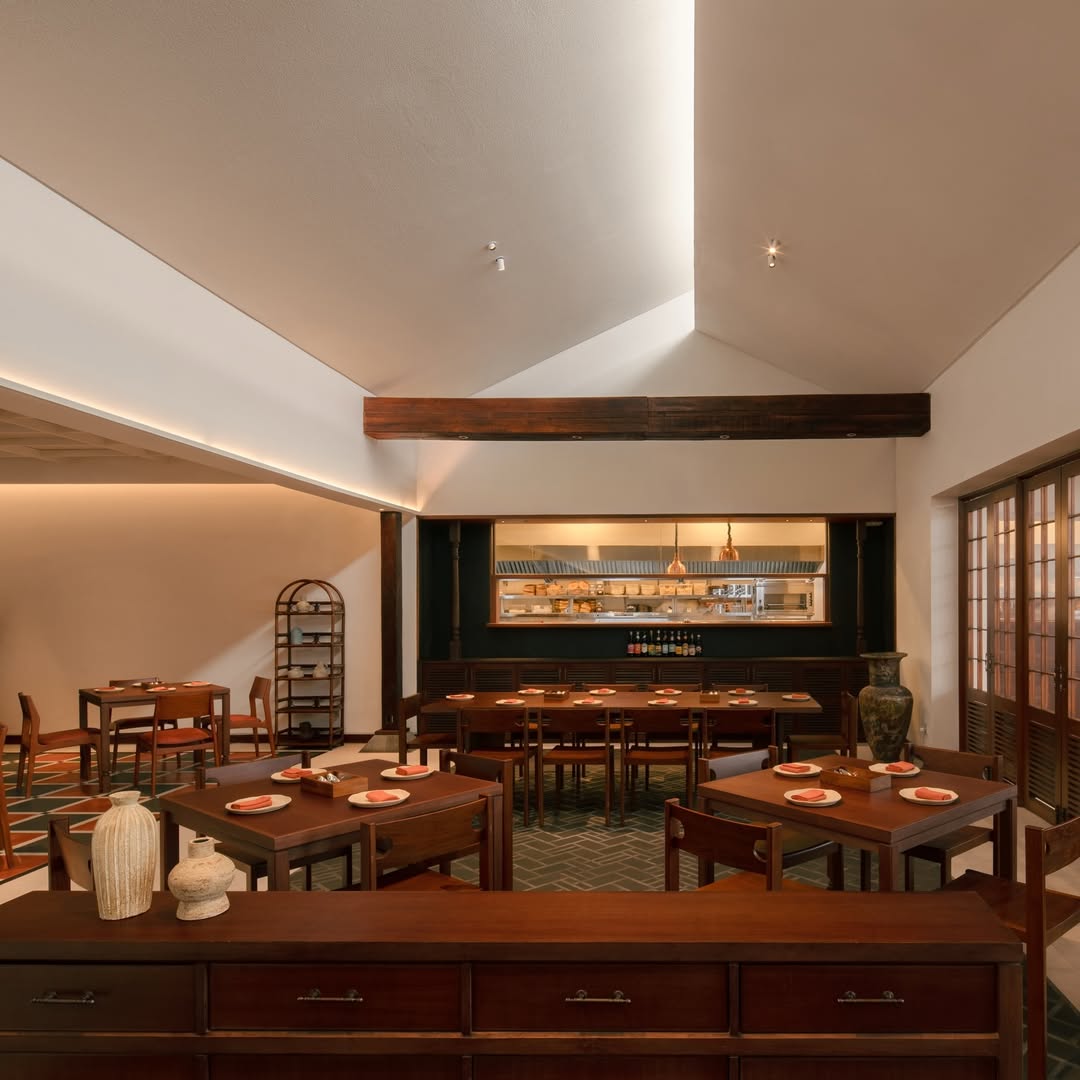
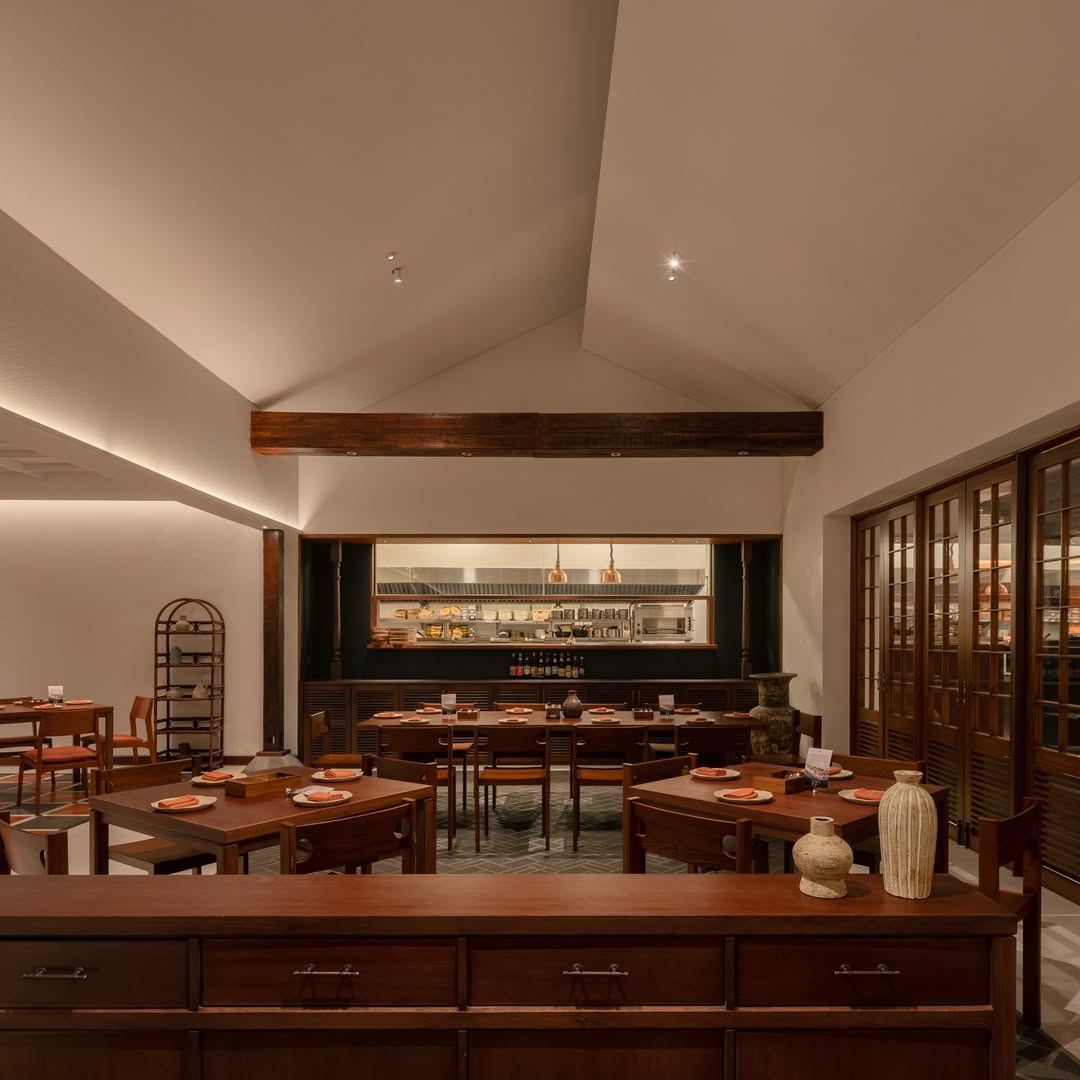
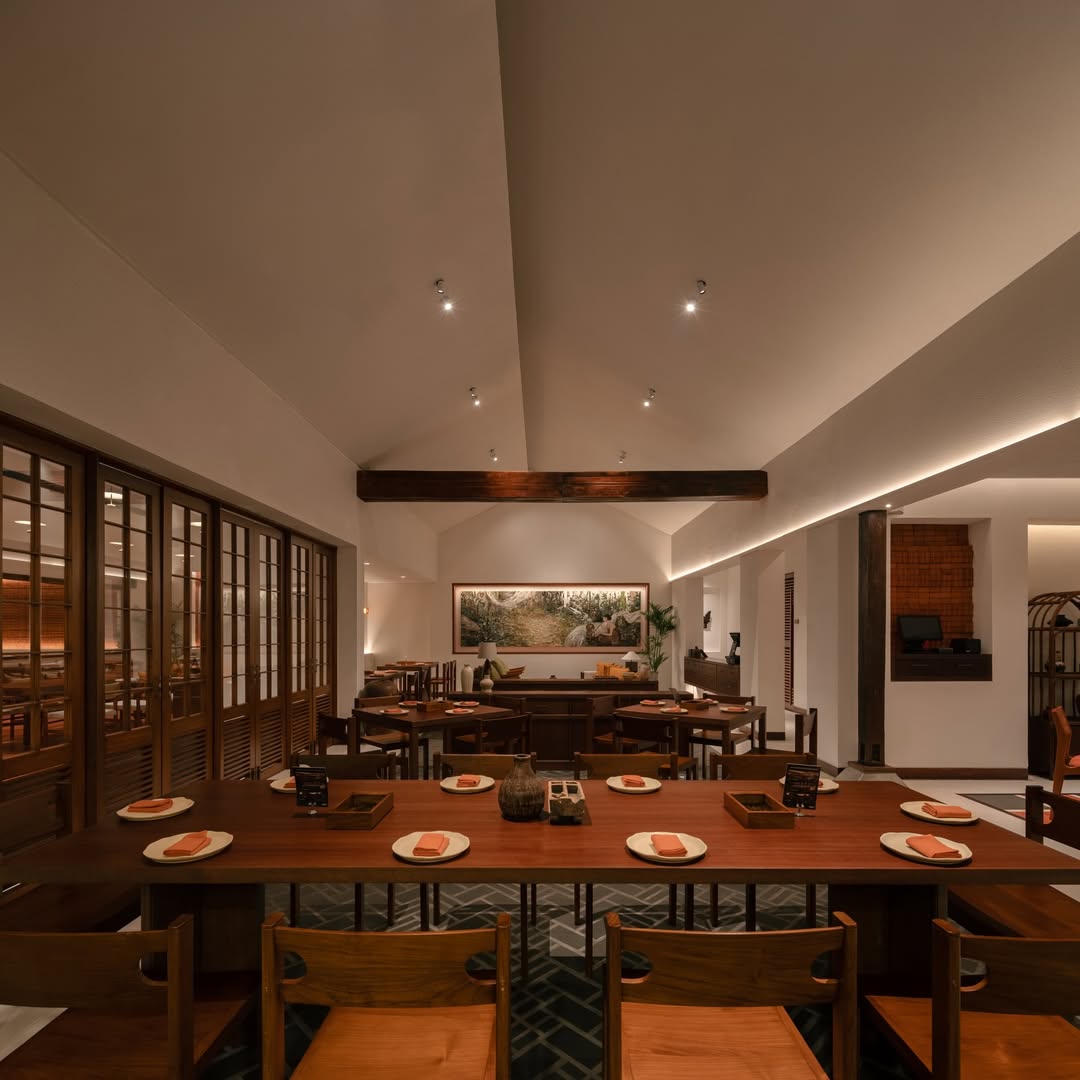
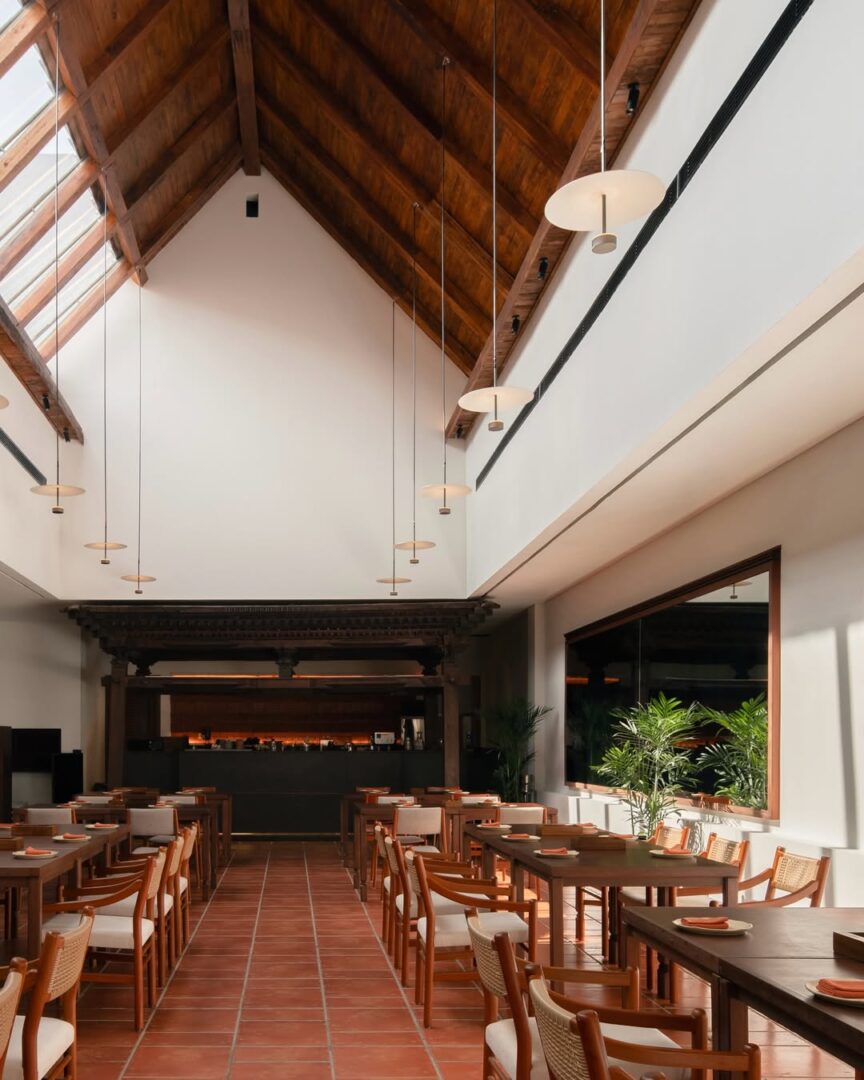
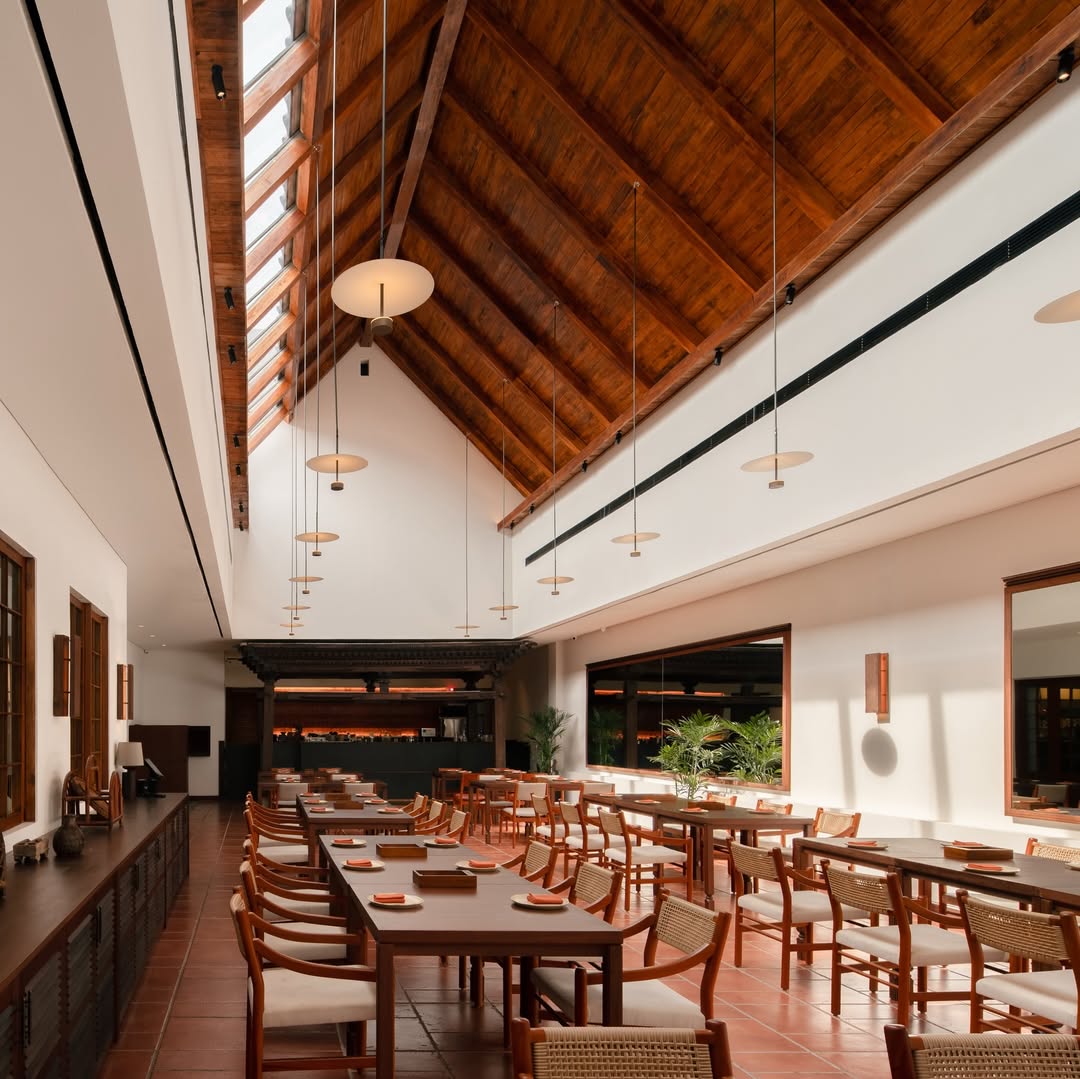
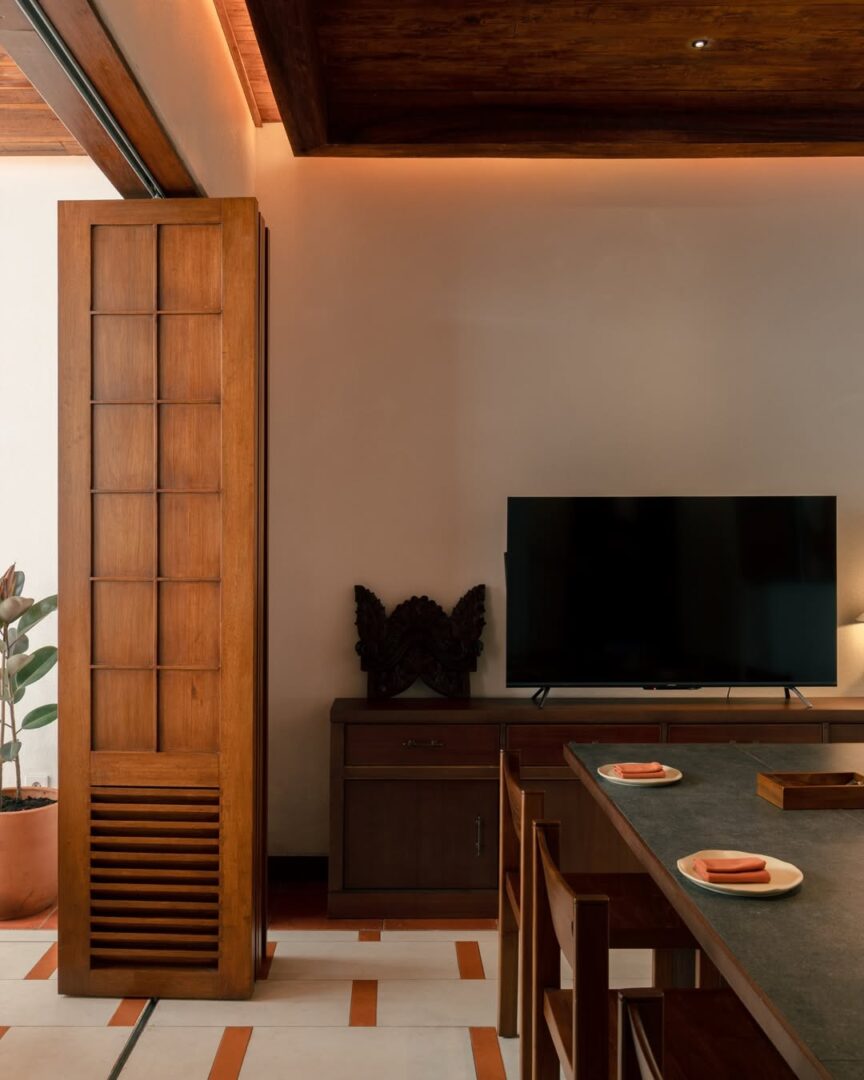
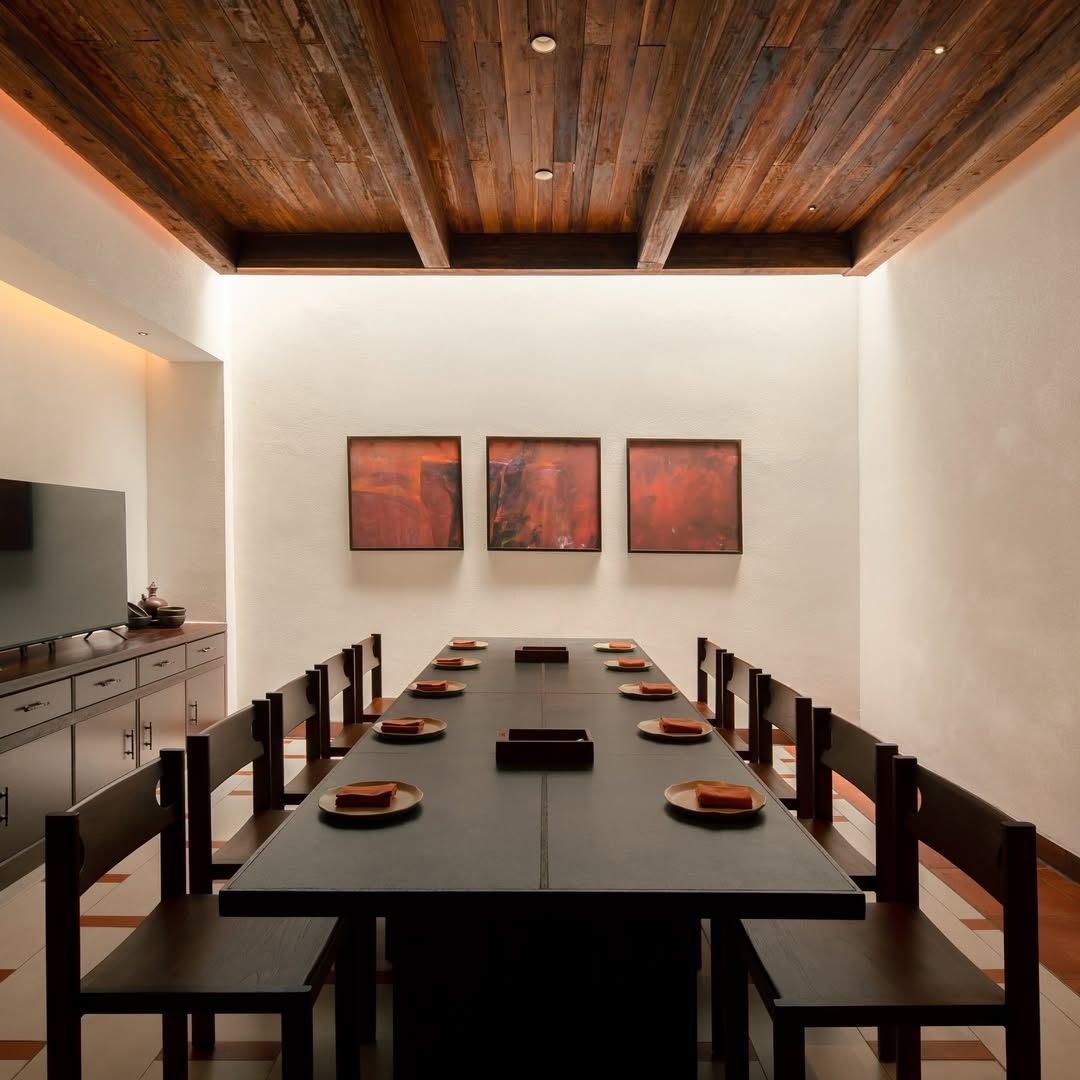
To name a space ‘Tamu’ is to set a specific intention for its architecture—directing the space to act as an extension of a welcome. We explored the threshold between the familiar and the new, translating the nuanced palate of the Indonesian cuisine that Tamu offers into a spatial experience. The design treads a fine line of maintaining the stature and poise of a formal greeting, while offering the effortless grace of a home. It is formal enough to honor the occasion, yet casual enough to feel like a familiar visit. By blurring the boundaries between a private residence and a public dining room, we sought to re-evoke the gentle ritual and warmth of kinship found in the simple act of receiving a guest.
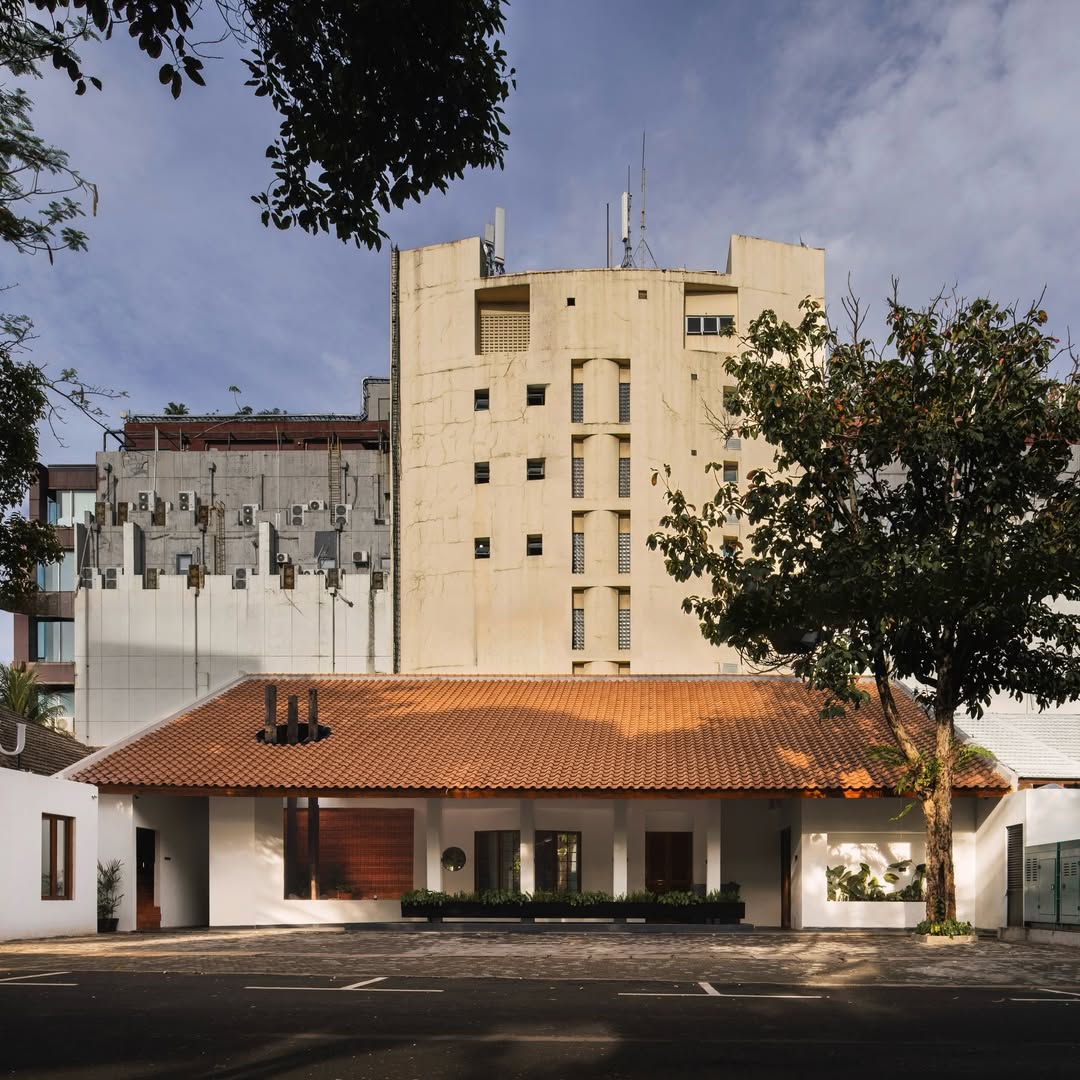
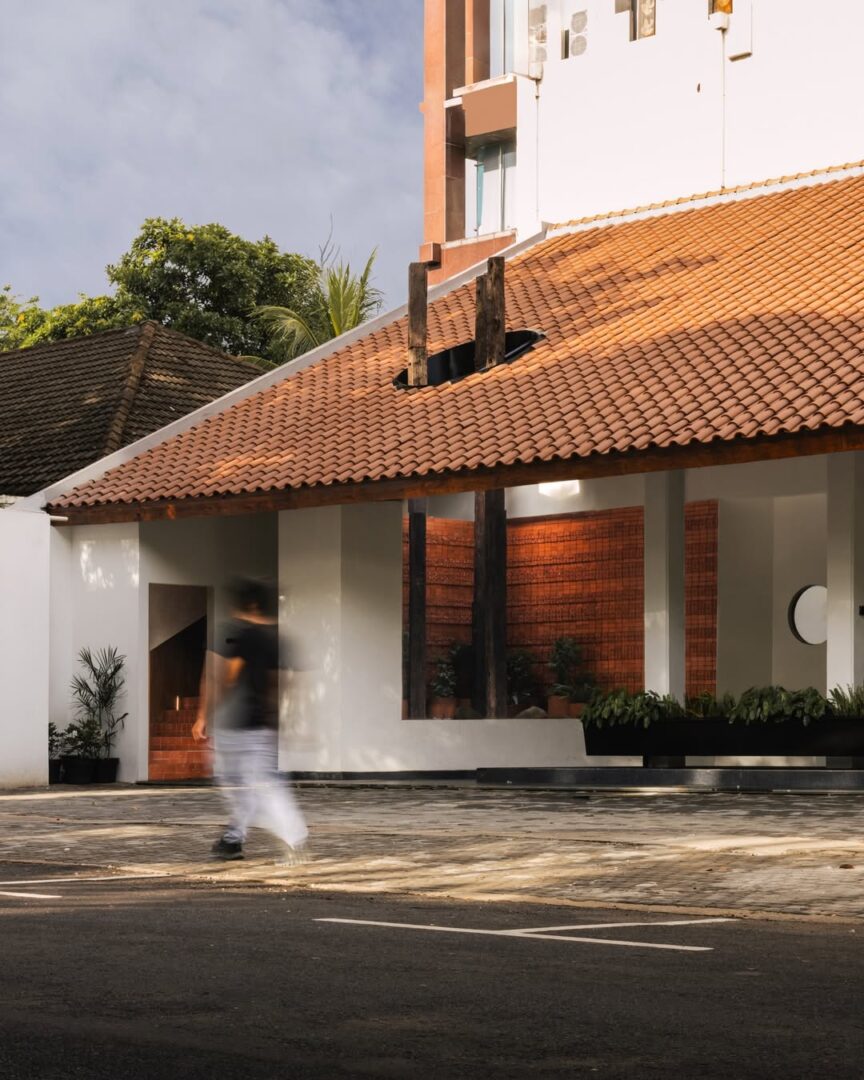
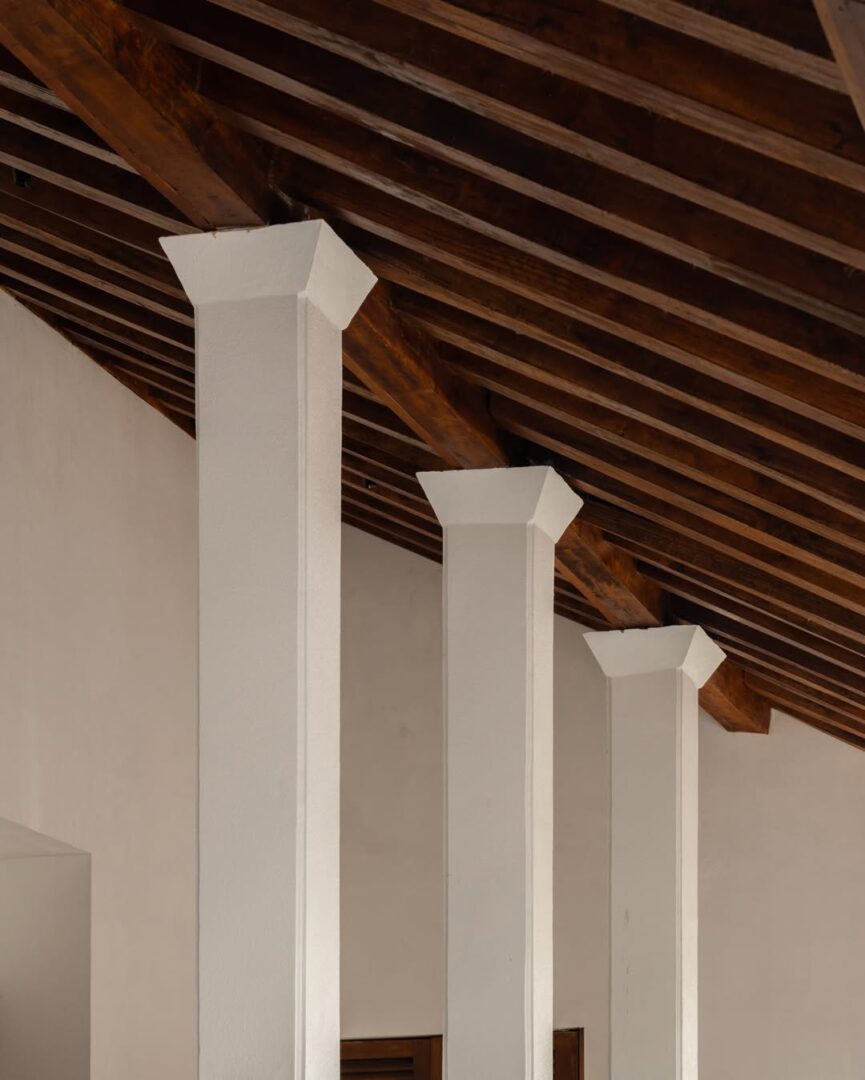
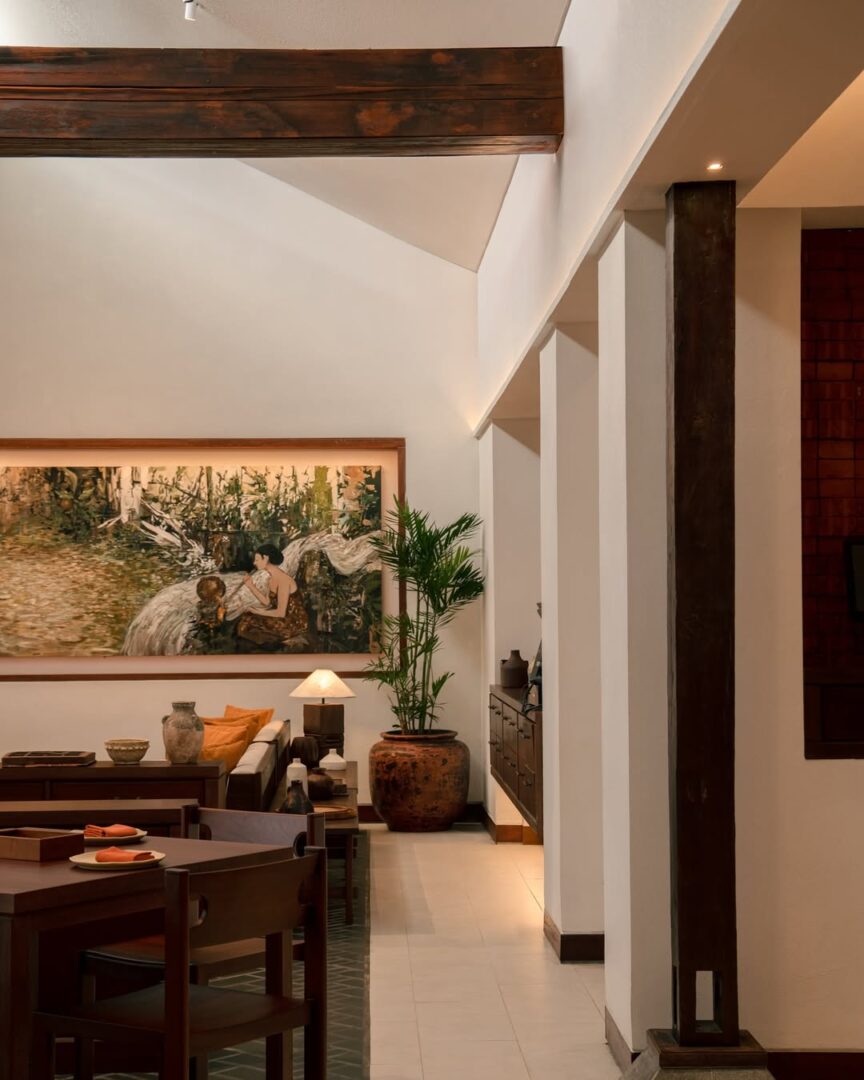
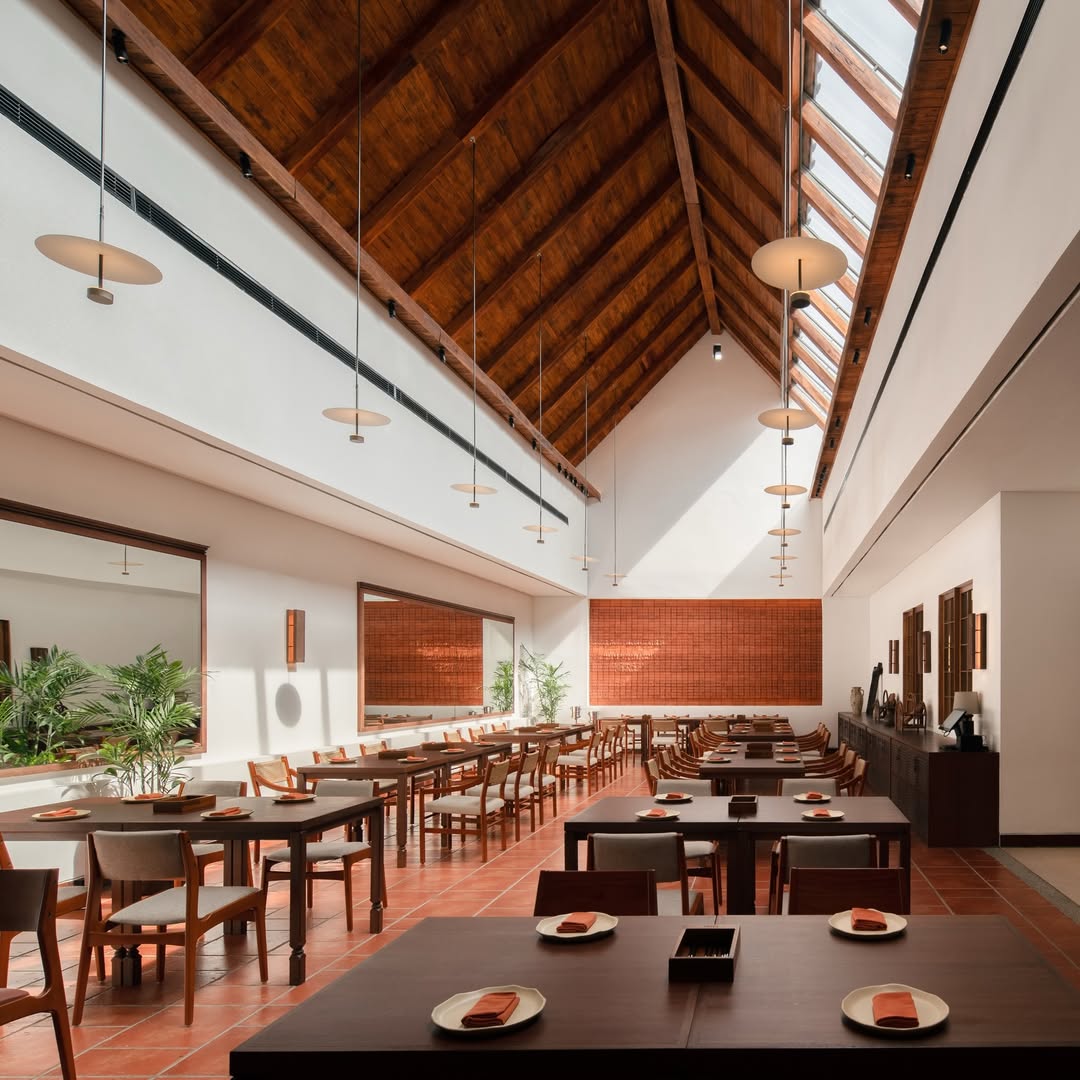
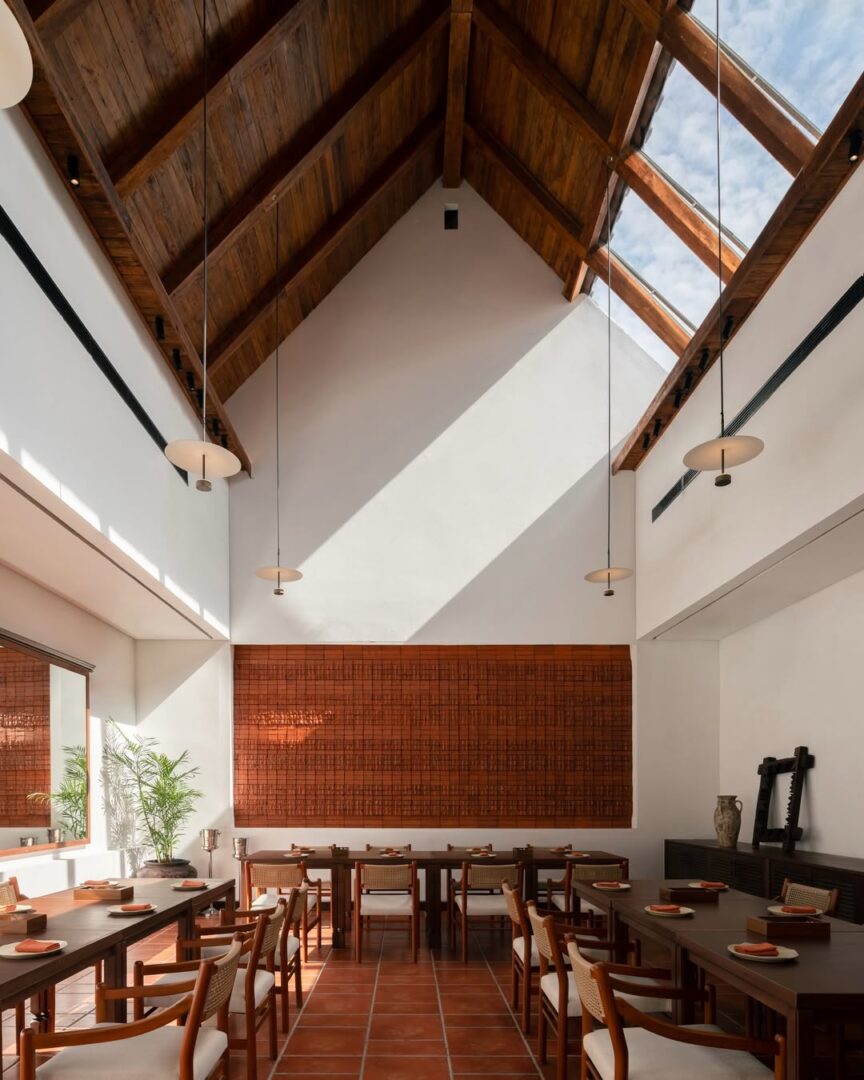
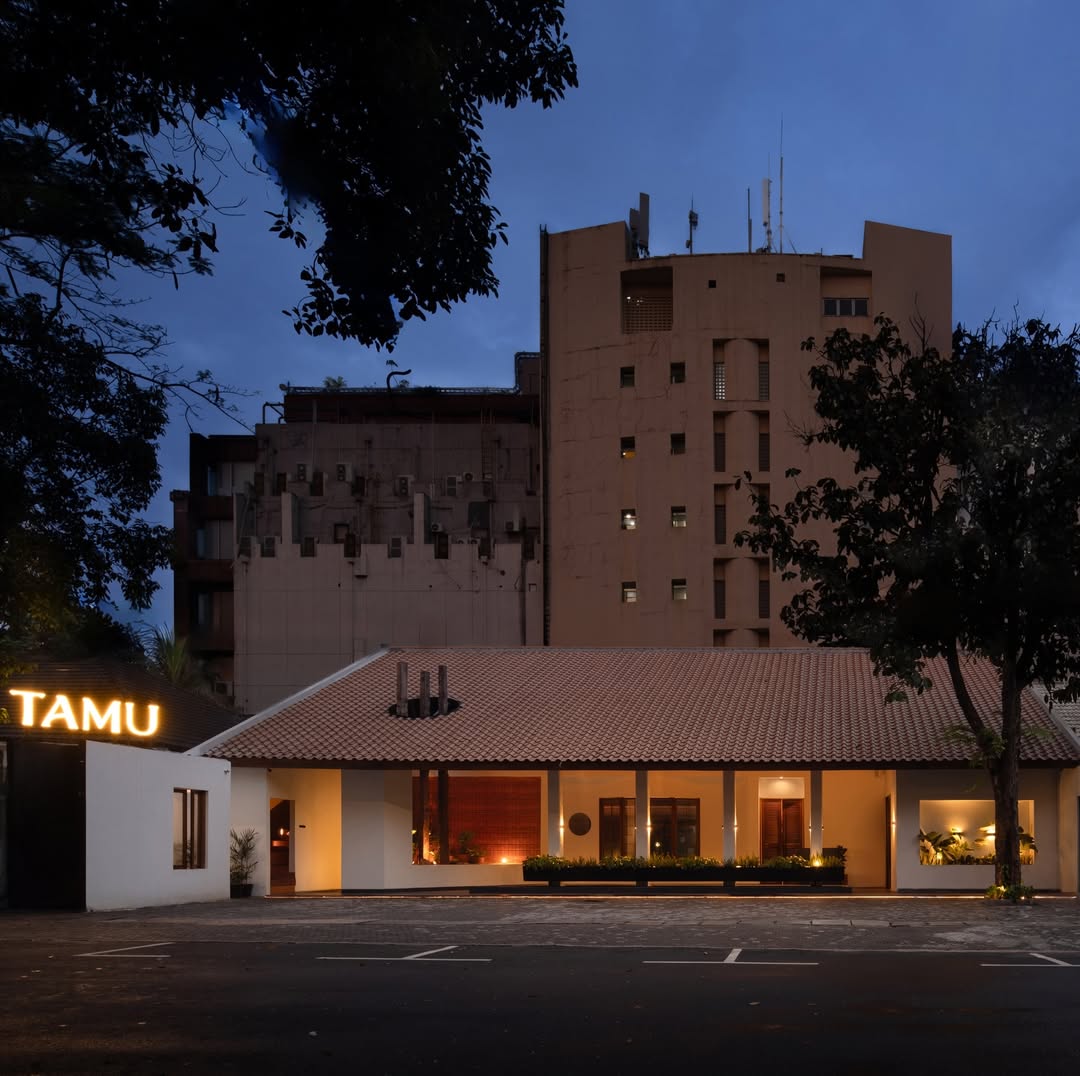
Amidst the verticality of the city, the house remains grounded. A renovation of an old residence, the project preserves the low-slung domesticity of the original structure, allowing its terracotta roof to become a silent anchor against the towering skyline. We sought to create a shelter that feels both ancestral and contemporary, where the heavy pitch of the roof is lightened by a central ridge of light. By opening the house to the sky, the domestic form is transformed into an elevated hall—lending a sense of sacredness to the familiar ‘rumah’.
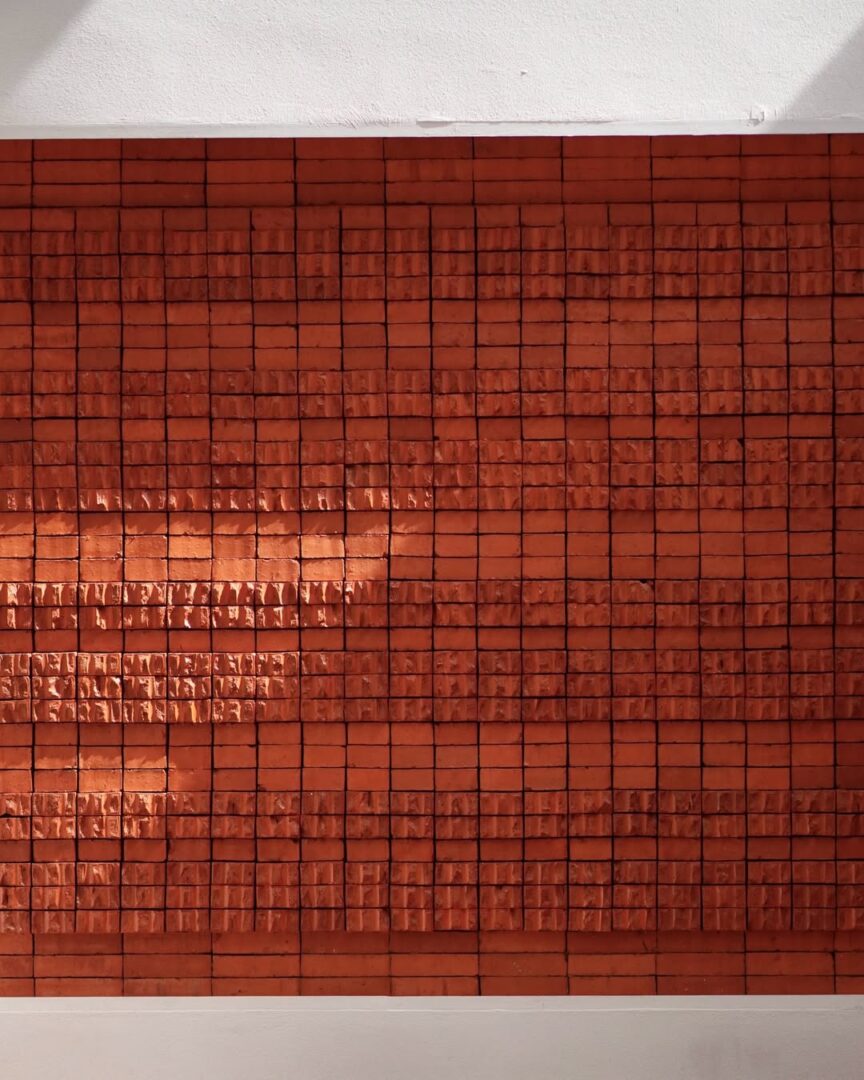
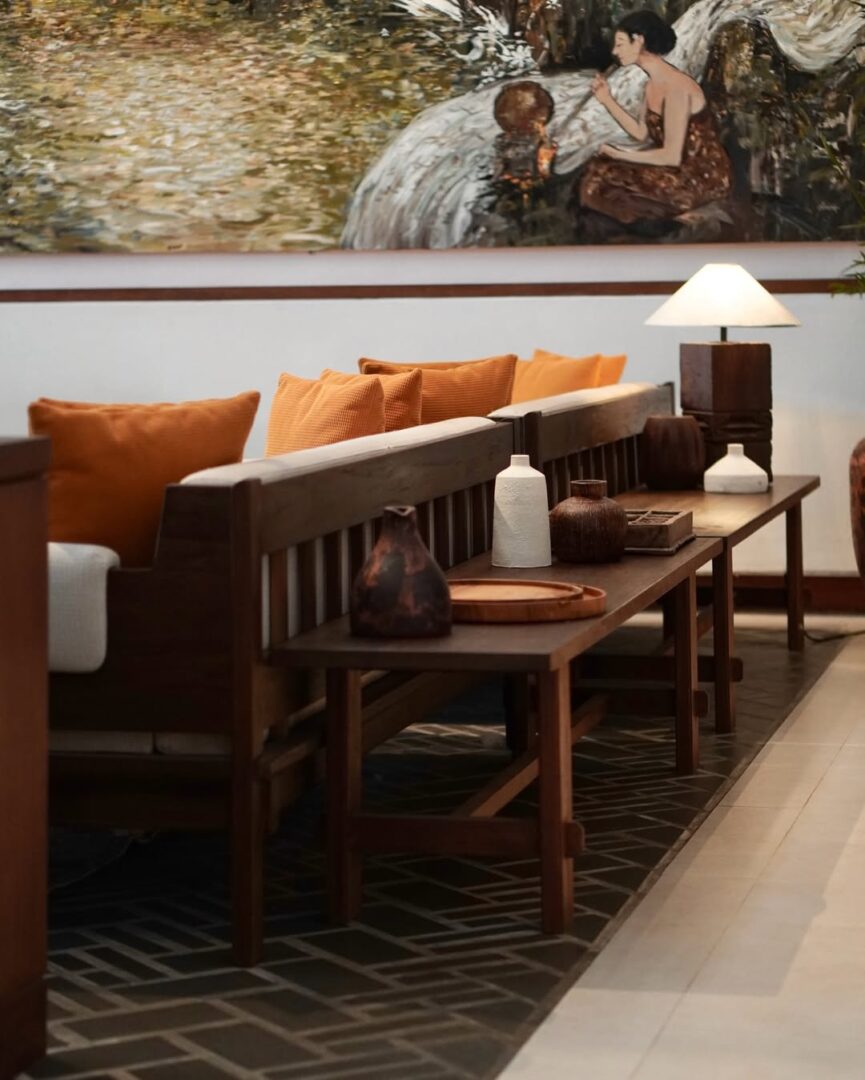
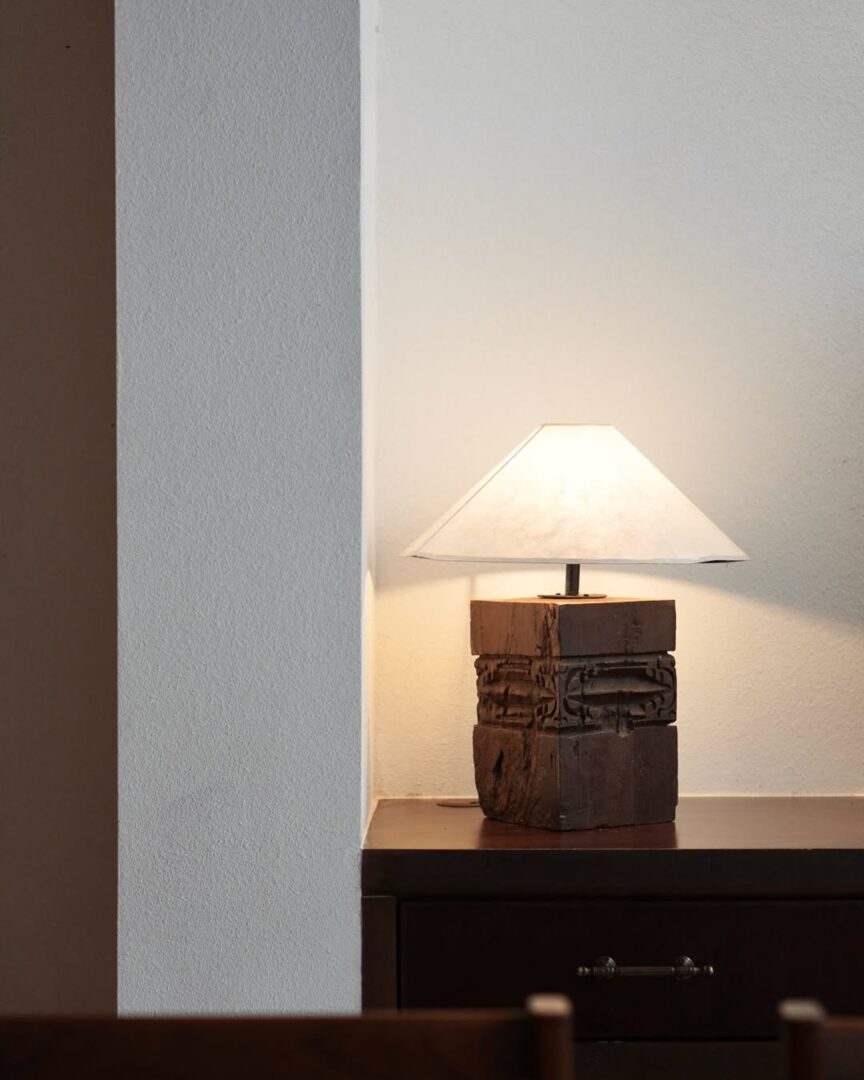
The narrative of the house is further told through its fragments—where a reclaimed Joglo finds a second life as a central focal point and intimate table lamps, and common bricks are fractured and rearranged into a rhythmic, tactile backdrop.